
VR headsets transform everyday life for needle-fearing children

From tears and fear – to smiles and joy. With the help of VR headsets, frightening blood tests and injections are being turned into positive experiences for children in Region Halland. The results now show that the technology works far better than anyone expected.

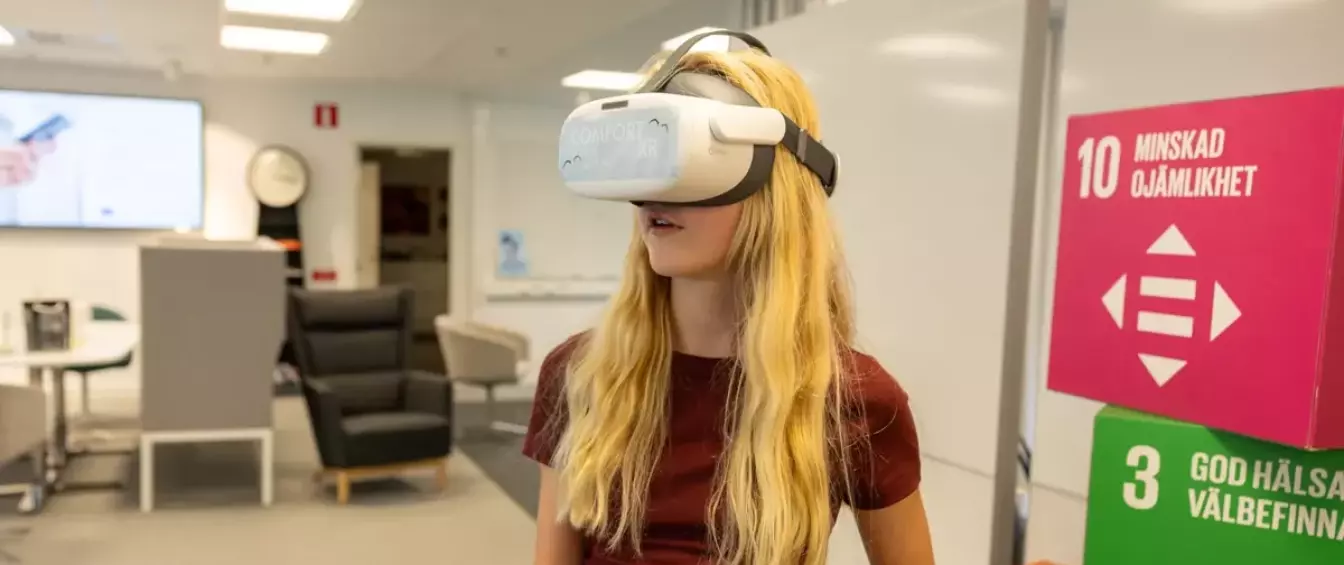
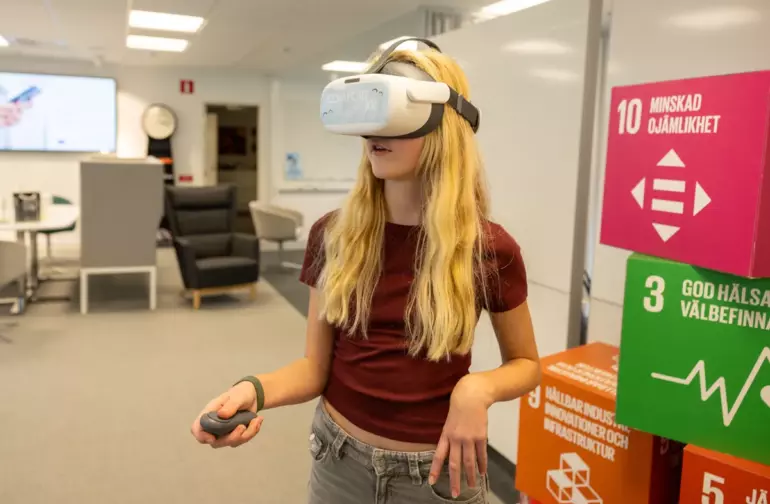
When 12-year-old Siri broke her arm this summer and needed an injection before surgery, she got to try something completely new. With a VR headset on her nose, she found herself in another world – a world where her fear of needles disappeared.

– It felt like a relief, like maybe it was going to be better, says Siri. You kind of knew in the back of your head that you were going to get a shot, but it wasn’t what you were seeing in front of you. So I barely noticed it. When the staff said it was over, I just wanted to keep playing.

A relief for parents

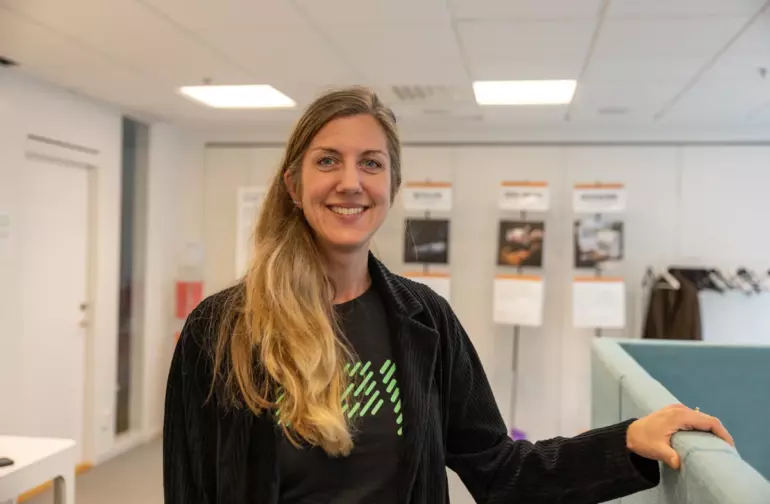
For Siri’s mother, Peggy Lindö – who also works as a project coordinator at Leap for Life (Halland’s health innovation arena) at Halmstad University and has been involved in the project – the experience was transformative.

Peggy Lindö, project coordinator at Leap for Life and Siri’s mother

– It was absolutely amazing. Like a miracle. Magic,” says Peggy. She had broken her arm once before, two or three years earlier, and back then it took forever. We practically had to hold her down – it was such an unpleasant experience. This time, it was like two completely different worlds.

An innovation project with real impact

Behind this technology is a collaboration between Region Halland, Leap for Life (Halland’s health innovation arena), and a Danish company that developed the VR solution together with hospitals in Copenhagen. Peter Uppman, innovation strategist at Region Halland, explains how the project began:

– We got in touch with a company in Copenhagen that had developed this solution. They had already tested it at many hospitals in Denmark. We decided to bring them here and let them present the solution to nurses at the pediatric clinics in Halmstad and Varberg.

When the nurses gathered, it quickly became clear that there was a great need.

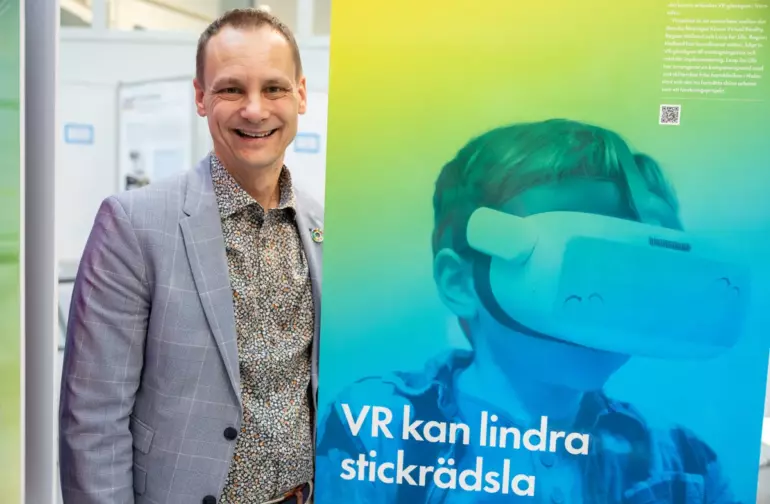
Peter Uppman, innovation strategist at Region Halland

– There are so many children who are afraid of needles in our care units – we meet them every day. We don’t have that many tools to use – numbing patches and soap bubbles for distraction, for example. But that doesn’t always help, explains Peter.

Testing across the region

During 2025, Region Halland has been testing the VR headsets at pediatric clinics in Varberg, Halmstad, and Kungsbacka, as well as at five healthcare centers. The results are consistently measurable:

– The results are fantastic. The feedback we’ve received so far – from the children, their parents, and the staff – is overwhelmingly positive. You can really see that this makes a difference, says Peter.

Children Who Actually Want to Come Back

One of the most striking effects is how the children’s attitudes have changed.

– The children are happy when they leave – much happier than before – and they actually think it’s fun to come back, Peter says.

In some places, the technology is even being tested on children who aren’t getting injections, simply to give them a positive experience of their visit. For the staff, the change is also enormous:

– The staff no longer need to resort to medication or, in the worst cases, anesthesia to calm children. For very needle-phobic kids, we can replace that with technology instead – something that doesn’t harm anyone. That’s amazing, says Peter.

The future and continued research

Evaluation will continue throughout 2025 to determine whether the technology should be implemented at all healthcare centers and units that regularly treat children. In addition, a research project has been launched in collaboration with Halmstad University:

– We’ve had an ethics application approved to conduct research on this and interview the children, so we can get more qualitative follow-up on what they actually think of the system, Peter explains.

The technology is now also being tested in other areas – specialist dental care and women’s health services. Although the games were developed for children, the team wants to explore whether they could also work for adult patients.

The regional impact

That Region Halland is leading such innovation projects has significance both for businesses and for the region itself:

– It means a lot for companies. It’s quite difficult for them to gain access to regional healthcare systems – especially in Sweden, where different authorities must be approached to sell a product like this. Someone has to take the lead and dare to test it, says Peter.

– But it’s also important for us. We get more satisfied staff and happier children in our care. It’s a win for everyone involved.

Multiple perspectives – One goal

For Peggy Lindö, who has both worked on the project and experienced it as a parent, the journey has been especially rewarding:

– It was so much fun! I was already involved before it became relevant from the parent side as well. But that made it feel even more meaningful and important, because I could really see the benefit it brings.

And for Siri? When she thinks about needles in the future, she says it feels a little easier now. And the VR headset – she definitely wants to use it again.
Co-creating for better healthcare.

Connected health is an innovative approach that integrates digital technology to improve healthcare services, and the VR solution for needle-anxious children is an excellent example of how these advancements are being applied in the region.

With a thriving ecosystem for health and welfare innovation, Halland is an ideal place to scale and invest in the future of healthcare.