A hospital visit led to an innovative safety solution

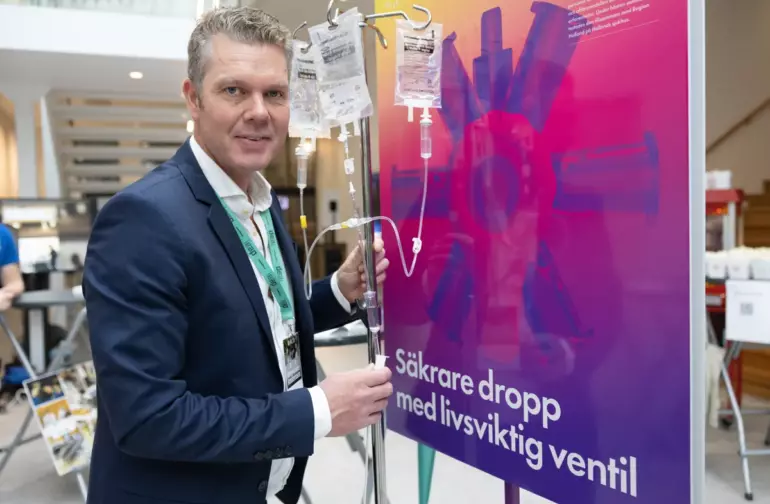
It started with a hospital visit in Halmstad in 2011. Today, 14 years later, an innovative safety solution is being tested at Halland Hospital – a product that can prevent serious medication mix-ups during cancer treatments. Behind the development is entrepreneur and former Halmstad resident Micael Törnblom, who, through collaboration with Region Halland and Leap for Life, has brought his idea all the way from a conceptual sketch to a finished product.

When Micael Törnblom accompanied a relative to Halland Hospital for chemotherapy treatment in 2011, he noticed something that made him react. Not because anything went wrong – on the contrary, the treatment worked perfectly. But with his background as a pilot, where safety thinking and redundant systems are a natural part of everyday life, he saw a potential safety risk.

Micael Törnblom

– I was impressed by the nurse, but I also became a bit nervous about how much responsibility rests on a single person to get everything right. I saw how easily things could go wrong if the medications were mixed,” Micael explains. “As pilots, we know we make mistakes, but we have safety systems – there are two of us in the cockpit, we have checklists. I felt that a physical barrier was needed here.

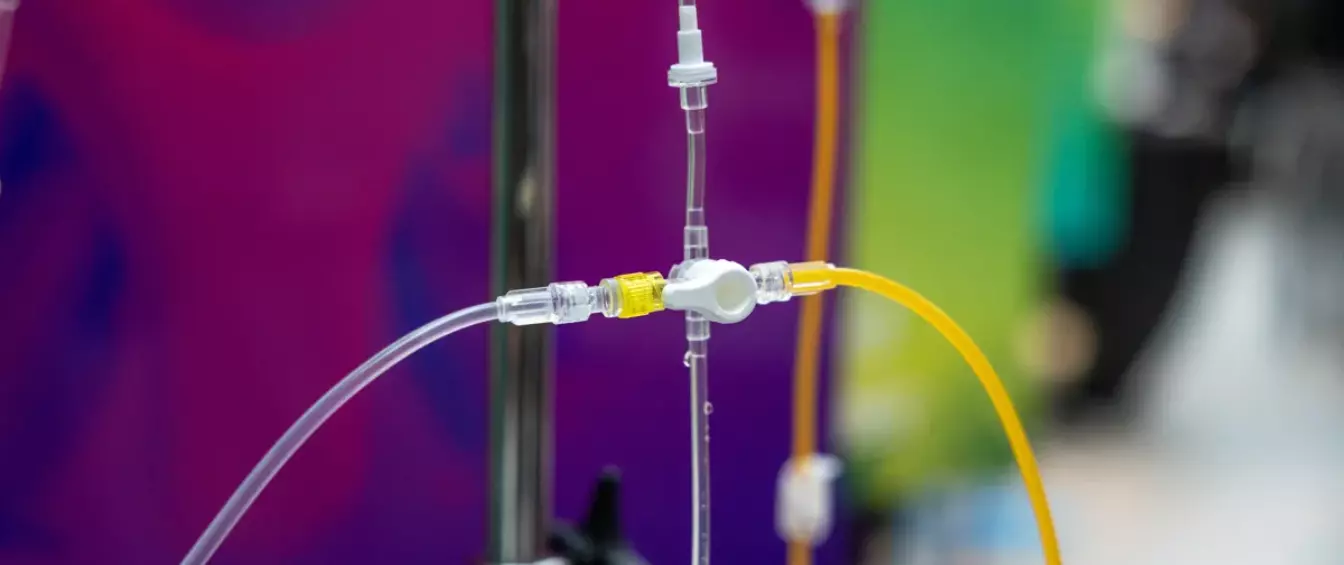
In an oncology ward, patients often have an average of three IV bags hanging, and the nurse must carefully control which fluid should flow at any given moment.

From idea to reality – With the right support

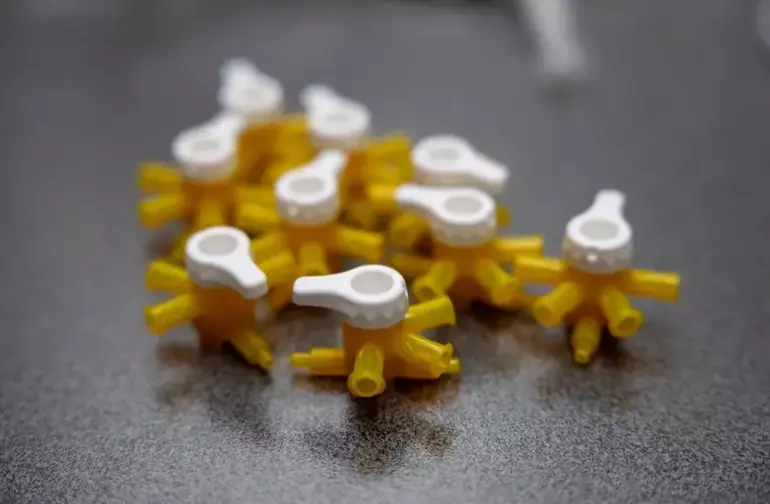
Micael sat down and sketched a solution: a rotary valve that would make it physically impossible to mix medications, even if several IV lines were accidentally opened at the same time. But to move the idea forward, he needed help verifying the need and getting in touch with the healthcare system.

This is where Leap for Life, Halland’s arena for health innovation, entered the picture as a crucial link between the entrepreneur and Region Halland. Leap for Life is a collaboration between Halmstad University and Region Halland, and Region Halland is one of its main financiers.

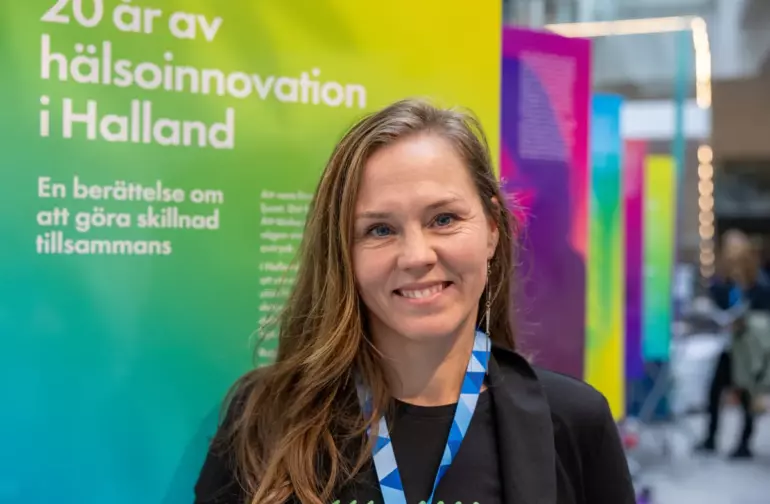
It’s fun to see the circle close, even though it has taken many years. Micael was at one of the region’s hospitals, saw the need, came to us, received early-stage support, and now he’s returning with a finished product.

Emma Börjesson, Operations Manager at Leap for Life

– As a company, it’s quite difficult to just knock on a door and say ‘Hi, could we present a solution to you?’ That’s not how it works,” Micael explains. “Having Leap for Life do that initial work has been incredibly valuable.

Emma Börjesson describes the organization’s role as bridge-builder between companies and healthcare.

– We connected Micael with nurses from the region and allowed him to verify the idea and the need in a structured way – that this was actually something that was in demand,” Emma says. “For companies, this kind of knowledge and exchange of experience is tremendously valuable.

A long journey – But worth it

From idea to finished product has taken nearly 14 years, but Micael emphasizes that the real development began in 2019, when he decided to drive the project forward himself.

– I had contact with large companies that were interested, but I understood the risk that they might just put it on the shelf. I didn’t want that to happen, Micael says. The idea was never that I would start a company, but when no one else did, I felt a great sense of responsibility.

The circle closes at Halland hospital

When the multi-way valve was tested for four weeks at Halland Hospital, the circle closed. It was at the same hospital where Micael’s relative had been treated in 2011 and where the whole idea was born.

– It’s satisfying to see the circle close, even if it has taken many years, says Emma Börjesson.

Emma Börjesson, Operations Manager at Leap for Life

–  Micael saw the need at one of the hospitals in the region, came to us for early support, and is now returning with a finished product. It’s not the same people still working in the ward, but it’s the same department.

The reactions from the four nurses who tested the product were unanimously positive. They reported developing new behavior patterns and even stated that they did not want to return to the existing system.

– We think it has been fun to take part in developing better and safer materials. It has also led to important discussions about our work environment and safety thinking in our daily work at the ward, says Hanna Simonsson, head of the oncology and palliative medicine clinic at Halland Hospital.

A model for future innovations

Emma Börjesson highlights the collaboration as an important example of how innovations can develop when all parties contribute.

–  Industry is, to some extent, the development department of healthcare. They are the ones who must produce the products and services that solve healthcare’s problems, she says. For companies to develop relevant solutions, it is crucial that healthcare employees share their time, experience, and knowledge. The competence and insight they contribute are invaluable for the companies.

She also emphasizes Leap for Life’s role as a neutral meeting place focused on knowledge exchange, not buying and selling.

– It would be unreasonable for companies to try to contact healthcare directly to meet nurses. The region doesn’t have the capacity for that – it’s not their main mission. That’s why actors like us exist, to serve as mediators.

The future: Increased patient safety

The multi-way valve can now make a difference for both patients and healthcare staff. The product removes a source of worry from nurses and creates an extra safety barrier in treatment situations where it is truly needed.

– This is exactly what we want to see – innovations that arise from real needs in healthcare coming back and actually being used,” Emma Börjesson concludes. And the fact that it becomes a Swedish company that hires and grows, with production in Sweden, makes it even better.

For Micael Törnblom, seeing his idea become reality brings mixed emotions, including a bit of guilt about doing business from a situation that was difficult for his family. But above all, he believes that the product makes a difference.

– You know that you’re doing something that actually gives back and improves things. And with my piloting experience, I know how important safety systems are. That’s why I felt such a strong responsibility to take this all the way.

Facts

  • Region Halland is tasked with running development and research projects from needs or ideas to implementation, with an initial focus on healthcare.

  • The Research and Innovation Centre (FIC) is responsible for the region-wide mission and aims to strengthen Region Halland’s ability to conduct research, development, and innovation.

  • The Research and Innovation Centre (FIC) also supports regional development in areas such as sustainability, infrastructure, and business development.

VR headsets transform everyday life for needle-fearing children

From tears and fear – to smiles and joy. With the help of VR headsets, frightening blood tests and injections are being turned into positive experiences for children in Region Halland. The results now show that the technology works far better than anyone expected.

When 12-year-old Siri broke her arm this summer and needed an injection before surgery, she got to try something completely new. With a VR headset on her nose, she found herself in another world – a world where her fear of needles disappeared.

– It felt like a relief, like maybe it was going to be better, says Siri. You kind of knew in the back of your head that you were going to get a shot, but it wasn’t what you were seeing in front of you. So I barely noticed it. When the staff said it was over, I just wanted to keep playing.

A relief for parents

For Siri’s mother, Peggy Lindö – who also works as a project coordinator at Leap for Life (Halland’s health innovation arena) at Halmstad University and has been involved in the project – the experience was transformative.

Peggy Lindö, project coordinator at Leap for Life and Siri’s mother

– It was absolutely amazing. Like a miracle. Magic,” says Peggy. She had broken her arm once before, two or three years earlier, and back then it took forever. We practically had to hold her down – it was such an unpleasant experience. This time, it was like two completely different worlds.

An innovation project with real impact

Behind this technology is a collaboration between Region Halland, Leap for Life (Halland’s health innovation arena), and a Danish company that developed the VR solution together with hospitals in Copenhagen. Peter Uppman, innovation strategist at Region Halland, explains how the project began:

– We got in touch with a company in Copenhagen that had developed this solution. They had already tested it at many hospitals in Denmark. We decided to bring them here and let them present the solution to nurses at the pediatric clinics in Halmstad and Varberg.

When the nurses gathered, it quickly became clear that there was a great need.

Peter Uppman, innovation strategist at Region Halland

– There are so many children who are afraid of needles in our care units – we meet them every day. We don’t have that many tools to use – numbing patches and soap bubbles for distraction, for example. But that doesn’t always help, explains Peter.

Testing across the region

During 2025, Region Halland has been testing the VR headsets at pediatric clinics in Varberg, Halmstad, and Kungsbacka, as well as at five healthcare centers. The results are consistently measurable:

– The results are fantastic. The feedback we’ve received so far – from the children, their parents, and the staff – is overwhelmingly positive. You can really see that this makes a difference, says Peter.

Children Who Actually Want to Come Back

One of the most striking effects is how the children’s attitudes have changed.

– The children are happy when they leave – much happier than before – and they actually think it’s fun to come back, Peter says.

In some places, the technology is even being tested on children who aren’t getting injections, simply to give them a positive experience of their visit. For the staff, the change is also enormous:

– The staff no longer need to resort to medication or, in the worst cases, anesthesia to calm children. For very needle-phobic kids, we can replace that with technology instead – something that doesn’t harm anyone. That’s amazing, says Peter.

The future and continued research

Evaluation will continue throughout 2025 to determine whether the technology should be implemented at all healthcare centers and units that regularly treat children. In addition, a research project has been launched in collaboration with Halmstad University:

– We’ve had an ethics application approved to conduct research on this and interview the children, so we can get more qualitative follow-up on what they actually think of the system, Peter explains.

The technology is now also being tested in other areas – specialist dental care and women’s health services. Although the games were developed for children, the team wants to explore whether they could also work for adult patients.

The regional impact

That Region Halland is leading such innovation projects has significance both for businesses and for the region itself:

– It means a lot for companies. It’s quite difficult for them to gain access to regional healthcare systems – especially in Sweden, where different authorities must be approached to sell a product like this. Someone has to take the lead and dare to test it, says Peter.

– But it’s also important for us. We get more satisfied staff and happier children in our care. It’s a win for everyone involved.

Multiple perspectives – One goal

For Peggy Lindö, who has both worked on the project and experienced it as a parent, the journey has been especially rewarding:

– It was so much fun! I was already involved before it became relevant from the parent side as well. But that made it feel even more meaningful and important, because I could really see the benefit it brings.

And for Siri? When she thinks about needles in the future, she says it feels a little easier now. And the VR headset – she definitely wants to use it again.

Co-creating for better healthcare.

Connected health is an innovative approach that integrates digital technology to improve healthcare services, and the VR solution for needle-anxious children is an excellent example of how these advancements are being applied in the region.

With a thriving ecosystem for health and welfare innovation, Halland is an ideal place to scale and invest in the future of healthcare.

From California to “Hallifornia”: Why one of the world’s top AI pioneers is teaming up with Region Halland

Ebba Cameron

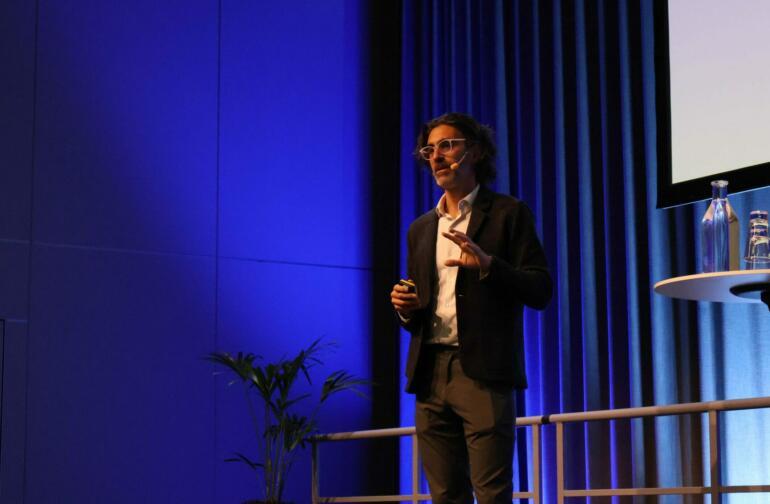
Ziad Obermeyer at Vitalis talking about ”Reinventing Medicine with AI”

Ziad Obermeyer is a physician and researcher at UC Berkeley, recently named one of Time Magazine’s 100 most influential people in AI globally. He’s working with Region Halland on an AI tool to predict and prevent sudden cardiac death – a project that could save lives and reshape care. We caught up with him during his visit to Sweden and Vitalis to learn more.

You’re currently working with Region Halland and Halmstad University on a project that could help prevent sudden cardiac death using AI. We’d love to hear a bit more about your work – and about your impressions of Sweden, Halland, and Vitalis so far!

Why did you choose to collaborate with Region Halland? What was it that made you want to get involved?

Sweden has some of the best data in the world, combined with huge amounts of medical and technical talent. When I met Markus Lingman (professor and senior physician at Region Halland) at a conference 10 years ago, all of that came together into a really exciting collaboration. It didn’t hurt that my wife is from Varberg—so every summer, we come to “Hallifornia” to eat smørgåstårta, surf, and enjoy Swedish summer. It’s great to combine this with research!

In your view, what is it that truly puts Region Halland ahead when it comes to turning innovation into real-world healthcare impact?

Data is a huge bottleneck for AI research. You can have the best dataset in the world, but it doesn’t do anyone any good unless there’s a pathway to actually use the data. The data infrastructure in Region Halland makes that possible in a safe and ethical way, and it’s no accident that there are so many collaborations, built around structure. I’ve never seen anything like it in any public health system anywhere in the world!

What do you think are the key ingredients for turning AI from a research tool into something that really helps patients in day-to-day clinical care?

I think there are two ingredients: the first is rigorous evaluation of the AI. We really need to understand how these tools perform when they are applied to real patients. I don’t think every AI tool needs to be put through a formal randomized trial—but when they are affecting life or death decisions, I don’t think there’s any other way. Every other new technology in health is evaluated this way—like drugs or devices—so why wouldn’t we put AI to the same test?

The second ingredient is turning a research project into a piece of software that’s used in clinical care. This is really hard for us academic researchers to wrap our minds around. We tend to think that our job ends when a research paper is published. But building a product that works 100% of the time, on 100% of operating systems, etc.—that is really hard! And it requires a completely different skill set from the one that most academics are comfortable with. So it’s really important to bring in the skills from the private sector—the world of software and startups—if we want the research to scale up and start impacting patients in the real world.

I’m excited about this project, but I’m also excited by what it represents: an international collaboration, anchored in data from Region Halland, that could scale globally and save a lot of lives.

Ziad Obermeyer, physician and researcher at UC Berkeley

Pax Engström

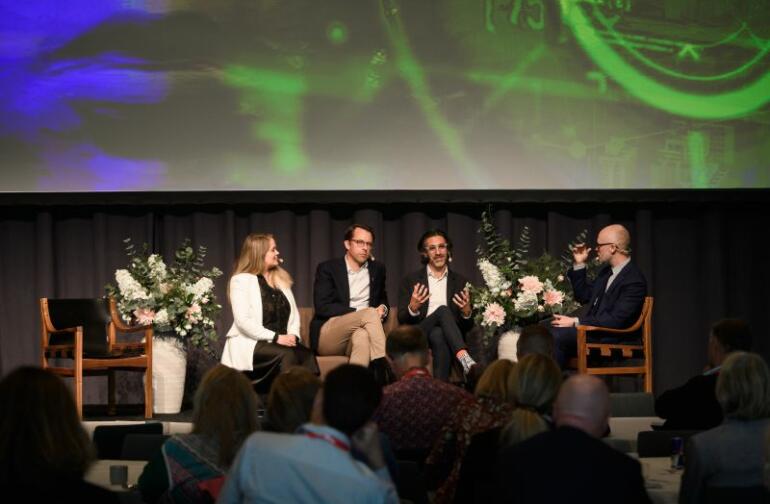
Middle from the left: Markus Lingman and Ziad Obermeyer at Vitalis 2025

You’re here in Sweden and at Vitalis – what are you hoping to take away from this visit, and what are you most excited to share?

I’m really excited to share some of the work I’ve been doing with Markus in Region Halland, on predicting—and preventing—sudden cardiac death.

Here’s the problem we’re trying to solve: a huge number of people suddenly drop dead every year. It’s about 10,000 per year in Sweden, 300,000 in the US. This is tragic because, if we knew who was at risk, we could prevent deaths: by implanting a defibrillator to shock their rhythm out of the arrythmias that cause death. But healthcare is very bad at identifying these people in advance—so lots of people die that could have been prevented.

We’ve built an algorithm that looks at a patient’s electrocardiogram—a very common, cheap test done every day in the health system—and finds those people at very high risk. Most of the people we flag are completely unsuspected based on current medical knowledge. We’re now starting to move that AI tool out of the research setting: we’re doing a study that follows high risk people over time, to make sure that the algorithm is right. If we can confirm our results, I think there’s a direct path to saving lives.

I’m excited about this project, but I’m also excited by what it represents: an international collaboration, anchored in data from Region Halland, that could scale globally and save a lot of lives. I hope this can be an example that makes other researchers, policy makers, and patients excited about the huge potential of AI in health care, both in Sweden and outside.

And finally – have you had a chance to experience anything outside the world of healthcare while you’re here? A beach, a fika, or anything else that’s made you smile?

I was in Stockholm yesterday for a Dagens Industri event, and we had a fantastic dinner smörgåsbord—including smörgåstårta, which made me happy. Then I walked back to my hotel along the water at sunset. Swedish summer is lovely!

Ziad Obermeyer’s and Markus Lingman’s work is a clear example of what becomes possible when cutting-edge research meets visionary leadership, ethical data use, and real-world healthcare needs. Their collaboration is not just pushing the boundaries of what AI can do—it’s demonstrating how global partnerships can create meaningful, local impact.

From California to “Hallifornia” isn’t just a catchy phrase—it’s a blueprint for the future of healthcare, built on shared knowledge, bold ideas, and a deep commitment to saving lives.

The co-creating of a better healthcare.

Our region might look small on the map — but we’re top-ranked in Sweden for healthcare quality and accessibility. In Halland, we combine quality, innovation, and data to build a healthcare system that’s more accessible, efficient, and sustainable.

New VR tech eases needle anxiety in children

Getting injections or having blood samples taken is something that many children, and even some adults, dread. Needle anxiety can lead to worry and distress, making medical visits stressful for both child and healthcare staff. A new VR solution is currently being tested in Halland to distract needle-anxious children and make the experience less unpleasant—perhaps even enjoyable. 

For many children, injections and blood tests are among the worst things they can imagine. Needle anxiety can cause significant distress, but if the child has the opportunity to focus on something else, it can make a big difference. Last year, Leap for Life tested this hypothesis together with the Danish company Khora Virtual Reality, the pediatric clinics in Halmstad and Varberg, and the surgical and intensive care unit at Halland Hospital. 

Following a completed competence panel, the pediatric clinic in Halmstad had the opportunity to borrow VR headsets for a period to test Khora’s solution, and the results were positive. It turned out that the children became less anxious, had a better healthcare experience, and in some cases, even needed less pain relief during the procedure. In the long run, the technology could mean that fewer children need to be restrained during blood sampling and that the use of nitrous oxide can be reduced.

VR Technology Tested in Halland’s Primary Care 

The method, which is already in use at Rigshospitalet in Denmark, has now become a reality in Halland. To see how VR works in primary care, the project has purchased eight VR sets for five different healthcare centers in Halland, as well as for the pediatric clinics in Halmstad, Varberg, and Kungsbacka for further testing. 

– At Leap for Life, we work to find new innovative solutions that can improve and develop healthcare and welfare services. VR technology is an excellent example of how we can use digital tools to make healthcare more flexible. Being able to test this in real healthcare environments is an important step towards implementing the technology of the future in today’s healthcare, says Peter Uppman, innovation leader at Leap for Life.

VR technology is an excellent example of how we can use digital tools to make healthcare more flexible.

Peter Uppman, Innovation Leader at Leap for Life

International Collaboration Driving Innovation 

The VR initiative is part of CareWare Nordic 2, an EU project aimed at strengthening collaboration between businesses, public organizations, academia, and civil society. The goal is to develop joint solutions that can be implemented in welfare services. VR technology for needle anxiety is a great example of how digital innovations can make a big difference in healthcare. Both Leap for Life and Region Halland are partners in the project. 

– This project demonstrates how collaboration between countries and organizations can create real change. Through CareWare Nordic 2, we have had the opportunity to test innovative solutions in both Sweden and Denmark, and we see that VR technology has great potential to improve healthcare on both sides of the Öresund. Collaborations like this are crucial for driving development forward, concludes Peter Uppman. 

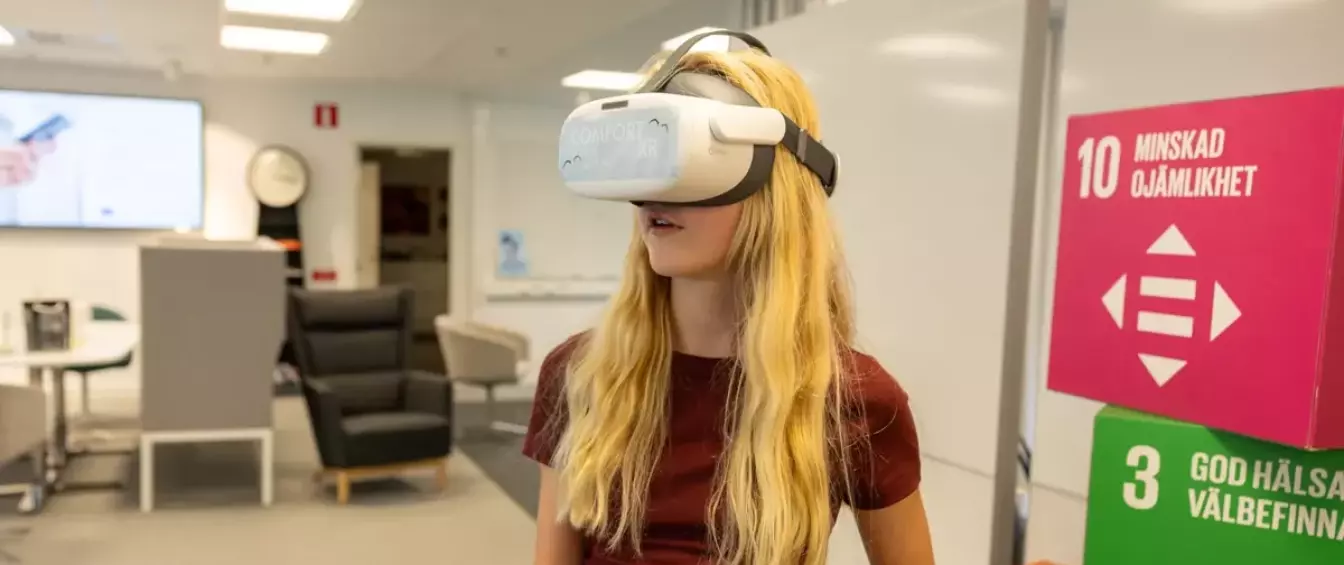
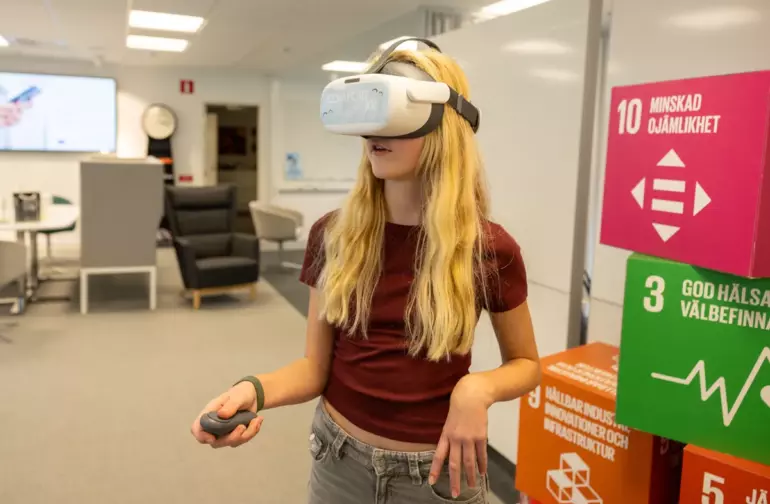
Children in Halland who feel nervous about injections can now immerse themselves in a VR world while the nurse does their job – and both staff and children think it works really well.

More information

Read more about CareWare Nordic 2
Watch SVT’s news feature about th VR solution at Getinge health centre (SV)

Co-creating for better healthcare

Connected health is an innovative approach that integrates digital technology to improve healthcare services, and the VR solution for needle-anxious children is an excellent example of how these advancements are being applied in the region.

With a thriving ecosystem for health and welfare innovation, Halland is an ideal place to scale and invest in the future of healthcare.

Virtual art project improves quality of life for seniors

VR_art_Leap_for_life

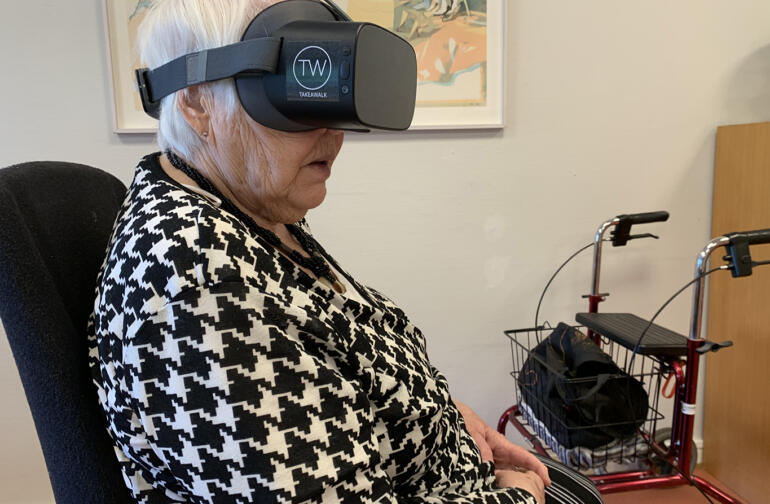
Virtual reality is stepping into the wonderful world of art. With today’s VR technology, anyone who isn’t able to physically be present for exhibitions is now able to virtually be a part of what’s actually happening in society, says Emma Börjesson, project leader at Leap for Life.

Research shows that cultural activities have positive effects on our well-being. Sweden also has a national goal where everyone should be able and allowed to participate in cultural life. However, many senior citizens are struggling with participation in cultural events.

With this in mind, Halmstad municipality turned to Leap for Life, an innovation arena located at Halmstad University, and a virtual reality project was initiated.

Our VR solution is a wonderful way to make art available to whoever experiences difficulties in physically attending our museums and art halls.

Emma Börjesson, project leader at Leap for Life

Leap for Life has been conducting the project “An Art Walk With Digital Glasses”, with the purpose of bringing local art with a strong sense of recognition for senior citizens to those who no longer aren’t able to attend art halls.

“It’s really about testing and exploring the possibilities around utilizing VR for this target group,” Emma Börjesson says.

Anders Sällström

Emma Börjesson, project leader at Leap for Life

Emma_Börjesson_Leap_for_Life

Filmed with 3D camera

In a collaboration between the cultural administration, the home care administration, the geographical information system in Halmstad municipality, and Danish company TakeAwalk, VR was tested on the target group to investigate the level of susceptibility for this type of technology and how it might be utilized. Leap for Life were responsible for compiling the experience.

“People in the test group were able to have their voice heard and affect the way we produced the VR experience. We had a lot of positive feedback from this part of the project,” says Emma Börjesson.

Because of TakeAwalk’s platform fitting the essential needs of the project, Leap for Life were able to create a local art walk which was then filmed by a 3D camera.

“We documented local art at Halmstad City Hall together with a speaking guide. Afterwards, we compiled a VR viewing which received very nice reviews.”

Navigating with your eyes

For safety reasons, the user, or visitor, is situated in a chair throughout the virtual art walk. For this particular occasion, an office chair was used with the ability to swivel and turn, without forcing the visitor to turn their head – something many senior citizens would otherwise not be able to do.

“This obviously hinders a walk-around-experience, but being able to swivel and turn still creates a sense of actually being there.”

There are symbols in the VR glasses which are activated with the assistance of the user’s eyes. This way, the visitor is navigating between art works and rooms by themselves.

“Our pilot’s quickly understood what they were able to do, and how to do it. We deliberately chose not to have too many symbols, in order to keep things simple.”

There were seven different pieces of artwork being presented. Among them, a mural, a textile piece, a sculpture and a relief. The average visiting time came out to around ten minutes.

All in all, the results were fair and Leap for Life is hoping to have this project further developed and used in different contexts, especially in senior citizen’s homes.

“We’re able to tailor the experiences based on need, there really is no limit to what experiences could be offered,” says Emma Börjesson and continues, “For us, it’s wonderful being able to offer a chance for senior citizens or people with certain restrictions to visit places like this, which they otherwise would not be able to. Only our imagination can stop us now.”


Want to know more about innovation in Halland? Contact us!

“Give every child a voice for improved health and well-being”

Ten years of research at Halmstad University investigating child participation in healthcare resulted in an app. The app was developed by Galaco, a company connected to the UN Convention on the Rights of the Child, with a clear vision of having children being involved and having a voice on issues directly concerning themselves.

– We have a lot of work to do, and there’s a huge demand. We think it’s important to have a dialogue on the child’s own terms, says Sofia Lindholm, CEO Galaco AB.

Professors Petra Svedberg and Jens Nygren were initially concerned that the clinical research they’d devoted their time to for the last ten years at Halmstad University would become just a report. Which is why they decided to take the leap into the business world. 

Svedberg and Nygren’s research had resulted in different collaborations with people from both health and education. This, in turn, gave them both important insights regarding children’s participation in healthcare. They noticed a clear lack of tools, competence and collaboration – far too important elements to let it get stuck in scientific publications.

– This is about creating a safe space for children in healthcare. For them to feel safe, informed and assured that they can ventilate fears or worries about their state of health, Lindholm explains.

Digital playful communication

Just as the UN Convention on the Rights of the Child became Swedish law on January 1 2020, Svedberg and Nygren founded Galaco based on their mutual research in innovative solutions used practically to make things better for children, and give them a voice in healthcare and education.

– Our ambition is to make it simple and played down, it shouldn’t be difficult for a child. We want them to feel involved and listened to in safe and comfortable conditions, Lindholm says.

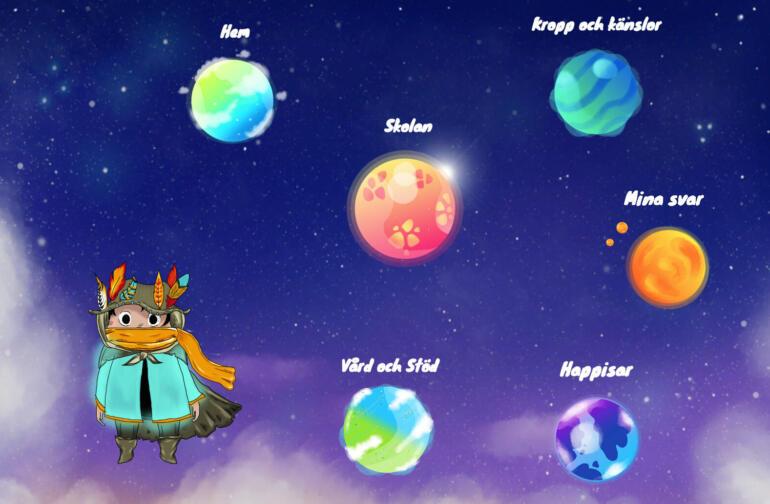
The result was a playful, digital communications tool meant to increase the participation of children in healthcare, developed with the support of Svedberg and Nygren’s clinical research. The tool consists of an app where children interact in a virtual environment in order to put words on their thoughts and feelings. 

– It’s based on questions directly aimed at children and their everyday life, like school, their dreams and feelings.

– It’s based on questions directly aimed at children and their everyday life, like school, their dreams and feelings.

Sofia Lindholm, CEO Galaco, about their app for children

Galaco has developed a playful tool for children to participate in their own healthcare.

Galaco app för barn

App for children based on research

The app is a platform where the children’s work can be followed up and provide conditions for a care process based on the perspective and needs of the child. Which, in turn, will lead to better resource allocation and increased quality.

– Being able to ask these questions through a gaming format, we can make the children feel safe. But it’s also making it easier for adults to bring up certain tough topics. It’s immensly important for a child to be able to convey their feelings, during for example cancer treatments, Lindholm says.

In what context should the app be used?

– Primarily in healthcare, but we’ve also noticed a certain interest from the educational sector. There are many places in society where children and adults communicate and have interactions, like refugee centers, legal processes and the civil society. Here we are able to really strengthen the rights of the child.

How big is this need for innovation in healthcare?

– The need is big, but demand is too. We all need new ways to meet, new and young companies are able to receive help from larger and more established companies who are able to open doors and use their experience to help advance newcomers on the scene.

Galaco is a succesful startup who, at a very early stage, got in touch with Almi Företagspartner, a state-owned company offering loans and business development for small and mid-sized companies in the Halland region. Today, Galaco view themselves as a “locally grown” company with a background in research at Halmstad University. Which also made it natural for Galaco to have their headquarters situated in Halmstad and be activate in the entire region.

– We have a nice and big network here where we’ve established ourselves. There’s already a big interest in us as a company, and it’s an opportunity for us to lead the way when it comes to helping children, based on the UN Convention on the Rights of the Child, Sofia Lindholm says.

CIDD – Center for Information Driven Health Care.

A reason why Halland has the potential to innovate future healthcare

Is it possible to make healthcare better, more preventive and individualized at the same time as it becomes more efficient and less costly?

Coordinated, structured and anonymized health data

Since 2019, a world-unique potential to innovate health care has been developed in Halland. All the health data in Halland has been collected, coordinated and structured into an anonymised data warehouse. And the purpose? To use the data warehouse in order to take analyzed and fact-based decisions – both for patients and the health care organization as a whole. To get an overall picture regarding both quality and efficiency, data is required that covers the entire organization, from journals to HR and financial systems.

A regional organizational function

CIDD is also a regional organizational function that works directly with the data warehouse to manage and analyze Halland’s health data. The organization functions as a support for people and initiatives that need to use the information in the data warehouse in various ways. A kind of hub for fact-based decisions that are based on a broad overall picture of the healthcare organization.

CIDD’s analyzes can be both simple and limited, but also complex and comprehensive. Sometimes machine learning (AI) is used, a competence that has been built up in close collaboration between Region Halland and Halmstad University.

Organizations working close to CIDD

Innovation platform and research centers like Health Data Center, CAISR Health and Leap for Life  are all connected to CIDD in different ways.

Want to talk more about CIDD? Get in touch here.